
This is the third increase in two months

If 4,000 workers could work round the clock for the construction of the new Parliament building, then there is no reason why all infrastructure projects too cannot follow that model, asserts Dr Sudhir Bisht.

A litre of petrol in Delhi will cost Rs 57.31 from Monday.
Expecting oil prices to remain under pressure, Fitch Ratings said deregulation of diesel prices in October will help in lowering the under-recoveries (which is nothing but international petroleum prices minus the subsidised retail rates).

If international crude oil prices zoom past the current level of about $90 per barrel and move towards $100 and beyond, middle-class consumers are not going to keep quiet about their discomfort, points out Arun Balakrishnan, former chairman and managing director, Hindustan Petroleum.
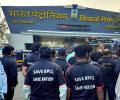
In 2017, a consortium led by Russian state oil company Rosneft agreed to buy Essar Oil for $12.9 billion in India's biggest foreign acquisition of a homegrown company. Rosneft's buyout of Essar's assets was meant to herald a wave of energy investments in India - over six decades after Esso, Caltex and Shell invested in India's refining sector in the 1950s. But the government has tripped up in its efforts to sell Bharat Petroleum Corporation Ltd (BPCL), formerly Burmah Shell, a blue chip public sector company. Bidders include a couple of global funds and resources firm Vedanta.

A 5 per cent GST rate kicked in on Monday on pre-packed and labelled food items such as cereals, pulses and flour weighing less than 25 kg.

Bucking the overall downtrend, shares of RIL rallied nearly 10 per cent, capping the Sensex loss to a large extent.
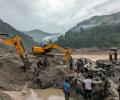
The Sikkim Government has confirmed that 14 people have died so far in the flash floods that occurred in Sikkim in the early hours of Wednesday.

Strategic direction post-COVID-19 and further details on asset monetisation are key expectations from the 43rd AGM of RIL, analysts said.

Petrol price was on Friday cut by Rs 2.42 per litre and diesel by Rs 2.25 a litre after an excise duty hike limited the benefit of global crude prices slumping to six-year low.

In a regulatory filing, Reliance -- the country's most valuable company - said, 'The 43rd AGM will be held on Wednesday, July 15, 2020 at 2 pm though video conferencing / other audio-visual means.'
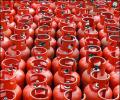
After making it available at petrol pumps, the convenient 5-kg cooking gas (LPG) cylinder will now be available at kirana stores and supermarkets in select cities.
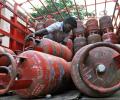
A 14.2-kg subsidised LPG cylinder in Delhi will now cost Rs 507.42 as against Rs 505.34 previously, according to a price notification of State-owned fuel retailers.

Seattle is not only the first American city to ban caste discrimination but is the first jurisdiction at any level globally outside South Asia to do so.

Auto Expo 2023 may not trigger a fresh rally in automobile stocks, say analysts, as this year's edition lacks participation from major listed players. It is also owing to the focus on electric vehicles (EVs), a segment where four-wheelers have minuscule market share. "In the passenger vehicles (PV) segment, Maruti Suzuki India and Tata Motors are the only listed players.
The wholesale price-based inflation spiked to 12.54 per cent in October, mainly due to rise in prices of manufactured products and crude petroleum. WPI inflation has remained in double digit for the seventh consecutive month beginning April. Inflation in September this year was at 10.66 per cent, while in October 2020 it was at 1.31 per cent.

For the first time in more than a decade, diesel demand has declined this fiscal as monthly price hikes and increased power generation clipped consumption, Indian Oil Corporation (IOC) Chairman R S Butola said.
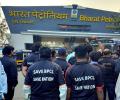
The sale is key to meeting the government's disinvestment target of Rs 2.1 trillion in the financial year 2020-21. So far, the disinvestment exercise has fetched the government Rs 34,845 crore during the current financial year.

The Reserve Bank on Wednesday hiked key benchmark policy rate by 25 basis points to 6.5 per cent, citing sticky core inflation. This is the sixth time interest rate has been hiked by the Reserve Bank of India (RBI) since May last year, taking the total quantum of hike to 250 basis points. Announcing the bi-monthly monetary policy, RBI Governor Shaktikanta Das said the Monetary Policy Committee (MPC) by a majority decided to raise the policy repo rate by 25 basis points and keep a 'strong vigil' on inflation outlook.
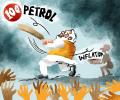
An average Indian spends no more than Rs 1.3 lakh per year, according to official statistics. This is close to what an average Indian earns annually. At this level of per capita income today, one litre of petrol costs one-third of an average Indian's daily income (Delhi prices), making it highly unaffordable. People in most other Asian and emerging countries find it more affordable.

The wholesale price-based inflation eased to 10.66 per cent in September, helped by moderating food prices even as crude petroleum witnessed a spike. WPI inflation remained in double-digit for the sixth consecutive month. In August, it was 11.39 per cent. In September 2020, inflation was 1.32 per cent. "The high rate of inflation in September 2021 is primarily due to rise in prices of mineral oils, basic metals, non-food articles, food products, crude petroleum & natural gas, chemicals and chemical products etc. as compared the corresponding month of the previous year," the commerce and industry ministry said in a statement.

Tata Motors on Monday launched the country's first CNG truck in the medium and heavy commercial (M&HCV) vehicle segment in the 28- and 19-tonne nodes. Most truck makers, including Tata Motors, currently offer CNG only in the small and light commercial vehicle segments. The company also launched a fleet of seven trucks in the intermediary and light commercial vehicle (I&LCV) segment, meant for varied applications.

Wholesale price-based inflation spiked to a record high of 15.08 per cent in April on rising prices across segments from food to commodities. The WPI-based inflation was 14.55 per cent in March and 10.74 per cent in April last year. "The high rate of inflation in April 2022 was primarily due to rise in prices of mineral oils, basic metals, crude petroleum & natural gas, food articles, non-food articles, food products and chemicals & chemical products etc. as compared to the corresponding month of the previous year," the commerce and industry ministry said in a statement.

The Index of Industrial Production (IIP) grew by 1.4 per cent in November as most components like manufacturing, electricity, mining, primary goods, and consumer durables witnessed a slowdown, according to data released by the National Statistical Office (NSO) on Wednesday. This is on the base of a decline of 1.7 per cent in November 2020 and before the new Covid variant started impacting economic activity. IIP growth was lower than the 4 per cent expansion recorded in the previous month but was better than a 1.6 per cent contraction seen in November 2020. Separately, rising prices of kitchen staples pushed retail inflation, or rate of price increase, to 5.59 per cent in December 2021, bringing it close to the upper band of Reserve Bank's comfort zone.
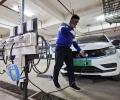
New Delhi's timing couldn't have been worse, both for India's fledgling electric vehicle (EV) sector and prospective electric bike buyers. It was hard to miss the perfect storm brewing for India's EV industry since early 2022. On one hand, you had several accidents involving battery fires that unnerved consumers; on the other, uncertainty had crept in over subsidies.
A swift recovery in oil demand in India is not only helping the stability of the global market, it is giving huge fiscal headroom to the government in terms of additional excise duty.
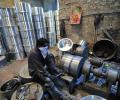
India's manufacturing sector activities improved in September as companies benefited from strengthening demand conditions amid the easing of COVID-19 restrictions, a monthly survey said on Friday. The seasonally adjusted IHS Markit India Manufacturing Purchasing Managers' Index (PMI) improved from 52.3 in August to 53.7 in September, indicating a stronger expansion in overall business conditions across the sector. The September PMI data pointed to an improvement in overall operating conditions for the third straight month. In PMI parlance, a print above 50 means expansion while a score below 50 denotes contraction.

Buckling under pressure, the government on Wednesday cut the excise duty on petrol and diesel by Rs 5 and Rs 10 respectively to bring down retail rates from record highs. The announcement comes on the eve of Diwali which will help bring down the skyrocketing prices of fuel and provide some relief to the common man battling inflation.

The Russia-Ukraine conflict, which has spooked financial markets globally, will set the tone for Dalal Street this week amid concerns over energy prices and foreign fund outflows, analysts said. Participants will also track key macroeconomic signals like GDP estimates and PMI data for manufacturing and services sectors to be announced this week, they added. "With earnings season behind us and given the overall sentiments, markets are expected to move in sync with global peers in the coming week. "A close eye will be kept on the developments concerning the Russia - Ukraine crisis and considering the inflation overhang, market participants will also observe movements in energy prices," said Shrikant Chouhan, Head of Equity Research (Retail), Kotak Securities Ltd.
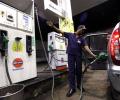
The movement of prices in international oil market and rupee-dollar exchange rate shall continue to be closely monitored

Wholesale price-based inflation rose to a record high of 15.88 per cent in May on rising prices of food items and crude oil. The Wholesale Price Index-based inflation was 15.08 per cent in April and 13.11 per cent in May last year. "The high rate of inflation in May, 2022 is primarily due to rise in prices of mineral oils, crude petroleum & natural gas, food articles, basic metals, non-food articles, chemicals & chemical products and food products etc. as compared to the corresponding month of the previous year," the commerce and industry ministry said in a statement.
With the O2C business outlook on the mend, the Street is also looking forward to news on RIL's proposal to sell up to 20 per cent of the O2C business to a strategic investor like Saudi Aramco.
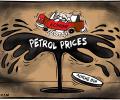
Amid news of a fuel shortage in some parts of the country and wider unrest over fuel issues in the neighbourhood, an analysis of the data from international tracker globalpetrolprices.com shows that the per litre price of petrol is higher in India than in seven out of its nine neighbours.

Finance Minister Nirmala Sitharaman on Thursday said inflation management cannot be "singularly" left to the monetary policy as a majority of activities are outside its purview in the current context. Speaking at a seminar organised by economic think-tank Icrier, the finance minister said that both the fiscal policy and the monetary policy have to work together to contain inflation. Consumer price index (CPI) based inflation or retail inflation is ruling above the Reserve Bank's comfort level of 6 per cent since January.
This is the third reduction in rates this month
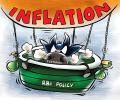
The RBI's Monetary Policy Committee brainstormed the impact of any future shocks on the inflation trajectory and stressed monitoring the cumulative effect of monetary policy actions over the past one year, which is still unfolding, revealed minutes of the rate-setting panel released on Thursday. The minutes of the meeting of the Monetary Policy Committee (MPC), headed by Reserve Bank Governor Shaktikanta Das, also indicated it would be premature to declare an end to the monetary tightening cycle, which started in May 2022 to check high inflation following the outbreak of the Russia-Ukraine war. The central bank, which effected six back-to-back hikes in the key short-term lending rate (repo) since May 2022 to check high inflation, decided to take a pause early this month.


The movement of prices in the international oil market and rupee-USD exchange rate shall continue to be monitored closely and developing trends of the market will be reflected in future price changes

Road Transport Minister Nitin Gadkari on Tuesday said the government will approach the capital market next month to raise funds for four road projects. The money will be raised through Infrastructure Investment Trusts (InvITs), and there will be an investment limit of Rs 10 lakh for retail investors, he added. "We will be approaching the capital market to raise funds for the four road projects... there will be an assured return of 7-8 per cent," Gadkari said while addressing a Ficci event.
